Food and routines
Safe vegetables for guinea pigs: daily greens, treats, and foods to avoid
Vegetables can help guinea pigs get vitamin C and variety, but hay still comes first. Use safe greens in sensible portions, introduce new foods gradually, and treat changes in appetite or droppings as a vet question.
Sources include RSPCA guinea pig diet guidance and the Merck Veterinary Manual's routine-care warning signs.
At a glance
The safe-food pattern
Start with hay, then vegetables
A safe vegetable plan only works if the rest of the diet is right. RSPCA guidance says good-quality hay should make up most of a guinea pig's diet and should always be available. Hay supports digestion and helps wear down teeth that keep growing.
Fresh guinea-pig pellets with vitamin C and clean water matter too. Vegetables add variety and helpful nutrients, but they should not push hay out of the routine.
Vegetables and herbs guinea pigs can eat daily
RSPCA lists fresh vegetables and herbs as good sources of vitamin C, with examples that can be eaten daily including parsley, celery, peppers, cucumber, gem lettuce, and romaine lettuce. Start with small portions, especially if the food is new to your guinea pig.
Daily does not mean unlimited. Keep hay available at all times, remove wilted fresh food, and keep an eye on weight, appetite, and droppings. Different guinea pigs tolerate foods differently, so the household log is part of the care.
Treat foods: small amounts, a few times a week
Some foods are better as occasional treats because sugar or calcium can become a problem in larger amounts. RSPCA examples include broccoli, spinach, kale, small pieces of carrot, and a small piece of apple.
Treat foods are easiest to manage when they are planned. If one person gives carrot in the morning and someone else gives apple at night, the guinea pig does not know it was meant to be "just a little." A shared log keeps small treats small.
Foods to avoid
Avoid iceberg lettuce, potato, garlic, avocado, coconut, and citrus fruits. RSPCA flags these as harmful or poisonous examples for guinea pigs. When in doubt, do not feed the food until you have checked a reputable welfare or veterinary source.
How to introduce new foods
Add one new food at a time and use a small amount first. Watch appetite, water intake, energy, and droppings over the next day or two. If droppings become soft, less frequent, sticky, or unusual, stop the new food and contact a vet if the change continues or the guinea pig seems unwell.
Merck Veterinary Manual notes that signs such as appetite loss, weight loss, difficulty breathing, diarrhea, discharge, low energy, bloody urine, or head tilt should be assessed promptly by a veterinarian.
How Tendlet helps
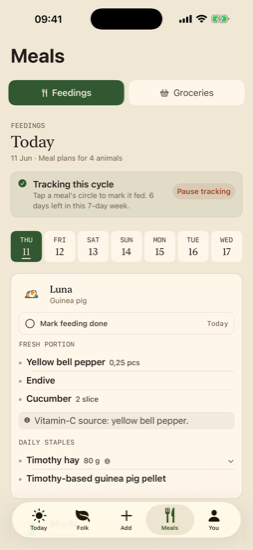
Tendlet makes vegetable care a shared routine: approved food lists, feeding plans, reminders, notes on what was served, and symptom records if something changes. That turns "Can guinea pigs eat this?" into a household system instead of a repeated search.